Parcel Pending
- 4.2
- Rating
- 100.00K
- Installs
- Free
- Price

 Analysis by App-foxy
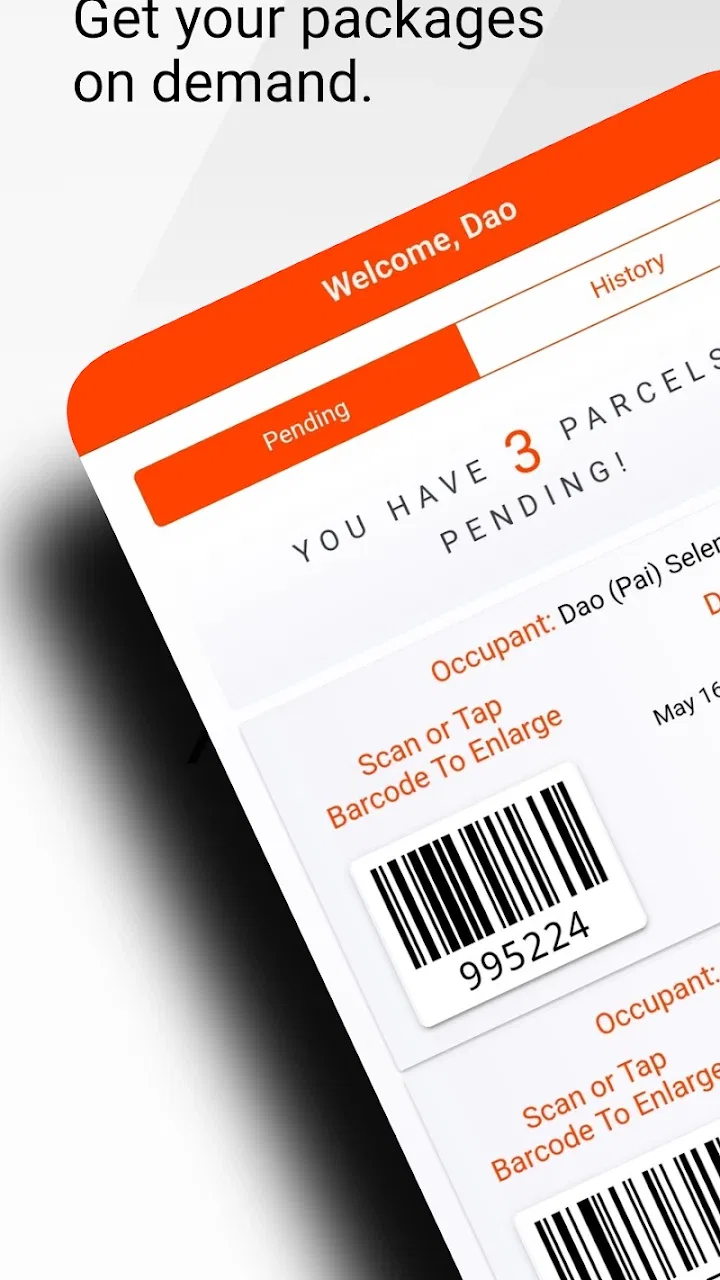
Parcel Pending is the kind of app you may barely think about until a delivery arrives at the perfect—or worst—moment. I tried looking at it as a practical household tool rather than a shopping companion, and that distinction matters. Its job is to support residents who receive parcels through a Parcel Pending setup, so the value comes from making collection less awkward, not from offering a broad marketplace or a general delivery dashboard.
As a free House & Home app from Parcel Pending, it makes the most sense for people living in properties that already use the company’s parcel service. If your building does not use Parcel Pending, there is little reason to install it. For the right resident, though, it can turn a delivery from an uncertain handoff into a task you can manage around your own schedule. My overall impression is positive, with one important condition: the app is only as useful as the parcel system connected to your residence.
How Parcel Pending feels in everyday use
I find Parcel Pending most useful when I treat it as a step in the building’s collection routine, rather than as a place to manage every delivery from start to finish. Before relying on it for a time-sensitive parcel, I’d learn how my property handles exceptions and keep that support route handy. That small bit of preparation makes it easier to judge where the app helps—and where a person or carrier update is the better next step.
You May Also Like

 Blood Strike: 2.5 Anniversary
Blood Strike’s Loadouts Turn Every Drop Into a Tactical Gamble
A close look at Blood Strike’s custom loadouts: how fast access to signature weapons reshapes its battle royale rhythm, rewards preparation, and narrows the gap between fights.

 Pandora - Music & Podcasts
Pandora’s Music Is Easy to Start, but Harder to Recover
Pandora’s strength is its low-effort path from a seed to a station. Its weak spot is how much confidence it asks you to place in connection, setup, and quiet recovery.

 8 Ball Pool
 Is Built on Rivalries, Rematches, and Routine
A close look at the rivalries, rematches, shared routines, and unanswered safety questions that turn a quick pool match into a persistent mobile community.

 Samsung Music
’s Quiet Strength Is Playing What You Already Own
Its reach comes less from spectacle than from dependable access to a personal library. That simplicity is both the app’s strongest retention engine and its ceiling.

 AccuWeather: Weather Radar
AccuWeather Review: A Quick, Clear Forecast for Everyday Decisions
For everyday plans, the best forecast is the one you can understand quickly. AccuWeather makes rain timing, radar, and local conditions easy to act on, with a few trade-offs.

 Hill Climb Racing
Why Hill Climb Racing Still Turns Crashes Into One More Run
A tiny car, a bumpy hill and one more upgrade: Hill Climb Racing keeps resurfacing because its simple chaos makes every near-miss feel personal.
More From Our News Desk
View All News


A focused tool rather than a full delivery organizer
The first thing I noticed is how narrow the experience is. That is not a criticism by itself. A focused resident app can be easier to understand than a general delivery application filled with retailers, carrier accounts, shopping alerts and unrelated notifications. Parcel Pending is built around the resident side of parcel collection, so I would approach it with one question: does my building use this service, and do I want a convenient way to handle those deliveries?
That focus also sets expectations for speed. I would not judge it by the standards of a social app or a shopping platform that constantly refreshes large feeds. The useful moments here are short: checking whether a parcel is ready, responding to a delivery-related prompt, or preparing to collect something. In those moments, a clean and direct path matters more than a long feature list. When an app is used at a locker or while walking through a lobby, unnecessary steps become more annoying than they would at home.
I found the resident angle especially helpful for shared buildings. A parcel left at a front desk can involve opening hours, queues, staff availability or the risk of arriving after the desk has closed. A managed parcel process can reduce some of that friction, and the app acts as the personal interface for the resident. It does not replace the physical collection point; it helps you interact with the arrangement your property has chosen.
What speed means in this particular app
Perceived speed depends on more than the application itself. The phone, the network inside the building, the parcel system and the service behind the account all contribute to how quickly a delivery-related action feels complete. I would therefore avoid treating a quick screen transition as proof that every parcel event will appear instantly. A delivery still has to be processed, recorded and made available through the connected system.
In practical terms, the app is most comfortable when I open it with a clear purpose. I would check it after expecting a delivery, use it when I am already planning a trip through the lobby, and close it once the task is done. That habit keeps the experience lightweight and avoids turning a simple collection into another application that demands constant attention.
A useful tip is to keep the app ready before reaching the collection area rather than waiting until you are standing in front of a locker or reception desk. This is not a claim that Parcel Pending needs unusual resources; it is simply a sensible workflow for any resident service where a weak indoor signal or a busy entrance can make small delays feel larger. If the building has a quiet time for collections, using that window may also make the overall experience feel smoother.
Busy delivery days and heavy-use moments
The real test is not a single ordinary parcel. It is the busy period when several deliveries arrive close together, when many residents are collecting items, or when you are trying to deal with a parcel while carrying groceries and managing a family schedule. This is where a resident-focused app can be more useful than relying on memory, paper notices or repeated conversations with a front desk.
I would still keep my expectations realistic. A digital resident tool can organize the interaction, but it cannot remove every physical bottleneck. If many people arrive at once, the building’s collection area may still be crowded. If a parcel has been registered incorrectly or the service is temporarily unavailable, reopening the app repeatedly is unlikely to solve the underlying issue. The better response is to use the app for the information it can provide, then follow the property’s normal support route when the problem is clearly operational.
One non-obvious advantage is that the app can help separate “I think my parcel arrived” from “I can actually collect it now.” That distinction prevents wasted trips. Before leaving an apartment, I would check the current delivery status and make sure I have enough time to complete the collection. For residents who live in large buildings or have a long walk to the lobby, that small check can be more valuable than a flashy extra feature.
Another practical use is household coordination. If someone else is going to collect a parcel for you, the important step is agreeing on the timing and the information they need before they reach the collection point. I would not assume that every building handles shared access in the same way, so this is an area where residents should follow their property’s instructions rather than improvise. The app is helpful as part of the plan, not a substitute for knowing the building’s rules.
Reliability, recovery and what to do when something goes wrong
For this kind of application, reliability is less about spending hours inside it and more about whether it is available when a delivery matters. My preferred test is simple: can I open it, understand the current situation and continue without confusion? A resident app earns trust through predictable short interactions. It does not need to entertain me; it needs to avoid making a routine collection harder.
Recovery deserves equal attention. Phones lose signal, applications close, and people tap the wrong option. I would treat Parcel Pending as one part of a larger process and keep basic details—such as the property’s normal support contact—available elsewhere. That is not a sign that the app is unreliable. It is good preparation for any service connected to a physical building, where the final answer may sometimes come from property staff or the parcel system itself.
If the app appears slow, my first steps would be practical: check the phone’s connection, move to a location with better reception, close and reopen the app, and confirm that the device is running the current version available to it. I would avoid repeatedly submitting the same action while waiting, because duplicate attempts can create more uncertainty than the original delay. If the issue concerns the physical parcel or locker rather than the screen, I would contact the property or the appropriate Parcel Pending support route.
That recovery approach is one of the reasons I see this as a utility rather than a mission-critical communication channel. It can make parcel collection easier, but I would not rely on it as the only place where I keep track of an important delivery. For ordinary household parcels, that is a reasonable trade-off. For a time-sensitive item, I would also retain the retailer’s or carrier’s own tracking information.
Stability and the cost of keeping it installed
Parcel Pending is not an app I would expect to consume attention throughout the day. Its usage pattern is naturally occasional, which makes stability more important than constant background activity. I prefer resident tools that can be opened when needed and then left alone. From that perspective, the app’s focused purpose works in its favor: there is no need to browse endlessly or maintain a daily routine just to get value from it.
Resource demands are difficult to judge from a short task, and I would not attach a precise battery or memory claim to the experience. Still, the category suggests a modest usage pattern. I would open it around a delivery, complete the relevant task and close it. If your phone is older or storage is tight, the sensible approach is to install it only when your property actually uses the service and then observe how it behaves on your device instead of assuming every phone will feel identical.
The application supports Android devices from version 4.4 onward, which gives it a broad compatibility range for older phones. That is useful for households where not everyone upgrades regularly. At the same time, an older operating system can affect the general experience through slower hardware, outdated system components or weaker connectivity. Compatibility means the app can run on that platform; it does not guarantee that every older handset will feel equally responsive.
The current version is 1.35.7. I would keep it updated when possible, especially for a service that depends on communication between an app and a managed parcel environment. Updates can be inconvenient when storage is limited, but postponing them indefinitely can make troubleshooting harder. If your phone handles other modern services comfortably, I would expect the app to fit naturally into that setup; if the device already struggles with basic applications, Parcel Pending may not be the source of every delay you notice.
Where it compares well with usual alternatives
The usual alternative is not always another app. Many residents rely on a concierge desk, a paper notice, an email, a carrier’s tracking page or simply a message from a neighbor. Each method has a different weakness. A desk may depend on opening hours, email can be easy to overlook, and carrier tracking may tell you that something was delivered without giving you the most useful resident-level collection context.
Parcel Pending has an advantage when the building’s parcel process is organized around its system. It brings the resident interaction into one place instead of making you remember which carrier delivered which item. That is particularly useful for people who receive parcels from different retailers. I would not expect it to replace every carrier application, however. Carrier tools can remain better for shipment-level movement before the parcel reaches the property, while the resident app is more relevant to the final collection stage.
A front desk can still be the better option for residents who need human help, have accessibility concerns, or regularly receive items that require special handling. Likewise, someone who receives very few parcels and already has a dependable staffed reception may not gain much from adding another app. The strongest case for Parcel Pending is a building where parcel volume is high, collection timing is inconvenient, and the service is already part of daily property operations.
Who will benefit most, and who should skip it
I would recommend it first to apartment residents who receive frequent online orders, work irregular hours, or dislike depending on a reception desk. It should also appeal to people who want a clearer routine for checking a delivery before walking to a shared collection area. Families and shared households may find the resident-centered approach useful when several people need to coordinate who will collect an item.
I would be more cautious if you live in a small building with no Parcel Pending installation, collect everything directly from carriers, or prefer to keep all delivery information inside one retailer or carrier application. In those cases, installing a separate resident tool may add little. The app is not a universal parcel tracker, and treating it as one could lead to disappointment.
Age and cost are straightforward advantages. It is free and rated for Everyone, so there is no purchase barrier or narrow age classification to consider for ordinary household use. I would still make sure children are not using a resident account without the account holder’s supervision, since parcel collection involves real-world access and building procedures even when the app itself is simple.
A realistic routine for using it well
Imagine that I am expecting a package on a workday when I will return home late. Instead of checking the carrier page repeatedly, I would wait until I am ready to leave work, open Parcel Pending and confirm whether the resident-side delivery step is complete. If it is ready, I can plan the lobby visit around my arrival. If it is not, I avoid making a needless trip and check again later.
When I reach the property, I would keep the phone unlocked and the app available before entering the collection area. After collecting the parcel, I would verify that I have the correct item and then leave rather than spending extra time navigating through screens. If the status does not match what I see physically, I would record the details and contact the building’s support channel instead of repeatedly tapping through the same flow.
This routine shows the app’s real strength: it can reduce uncertainty around the last part of delivery. It does not make shopping faster, guarantee a carrier’s arrival time or remove every building-level problem. What it can do is give the resident a more direct way to participate in the parcel process already in place.
My performance verdict
After looking at speed expectations, busy-use situations, recovery and older-device compatibility, I see Parcel Pending as a practical utility with a deliberately limited scope. Its performance should be judged by whether it makes a short resident task clearer and less inconvenient, not by how many features it offers. The experience is most convincing when the property is well organized and the user needs a simple way to manage collection around a busy day.
The app has a 4.4 average from around 4.9 thousand ratings, and it has passed 100 thousand installs. Those figures suggest that it has found a real audience among residents using this type of parcel arrangement, although they do not change the central condition: your building needs to support Parcel Pending for the app to matter.
Parcel Pending was released on May 7, 2018, and its continued presence in the House & Home category gives it the feel of an established resident utility rather than a novelty. I would install it without hesitation if my property uses the service and I regularly deal with deliveries. I would skip it if I need a broad carrier tracker or if my building has no Parcel Pending setup.
My bottom line: Parcel Pending is worth using when it matches your building’s parcel workflow, because its focused design can save time at the exact point where delivery convenience often breaks down. It is not a replacement for every delivery app or every human support option, but for the right resident, that narrow purpose is precisely what makes it useful.
FAQs for Parcel Pending
01What is Parcel Pending and how does it work?
Parcel Pending is a package management solution designed to simplify parcel delivery and retrieval processes for residential and commercial properties. Users receive a notification when a package arrives, and they can retrieve it using a secure code or mobile app. This system ensures packages are safely stored and accessible 24/7.
02Is Parcel Pending secure for my deliveries?
Yes, Parcel Pending offers a high level of security for your deliveries. Packages are stored in secure lockers that can only be accessed using a unique code sent to the recipient. This minimizes the risk of theft or loss, ensuring your packages are safe until you retrieve them.
03How do I receive notifications from Parcel Pending?
When a package is delivered, Parcel Pending sends notifications via email, SMS, or the mobile app. These notifications include a unique access code and instructions on how to retrieve your package, ensuring you’re informed promptly about your delivery.
04Can Parcel Pending handle oversized packages?
Parcel Pending lockers are designed to accommodate a variety of package sizes, including oversized items. However, there may be limitations based on the specific locker dimensions at your location. It's advisable to check with your property management for any size restrictions.
05What should I do if I encounter an issue with my Parcel Pending locker?
If you experience any issues, such as difficulty opening the locker or a missing package, you should contact Parcel Pending customer support immediately. They provide assistance through phone or email to resolve any problems quickly and efficiently.
Pros
- User-friendly interface with intuitive navigation.
- Real-time notifications for package updates.
- Secure package storage with unique access codes.
- 24/7 availability for convenient pickup.
- Supports multiple delivery carriers.
Cons
- Limited to locations with Parcel Pending lockers.
- Requires app permissions for notifications.
- No phone support
- app-based assistance only.
- Dependent on internet connection for updates.
- Limited customization of notification settings.

Parcel Pending
Gallery